Reach engineers who run production
Ship It Weekly is a focused DevOps, SRE, platform and cloud engineering show for people close to infrastructure, reliability, delivery, and cloud operations. It is built around signal, operator trust, and sponsor fit instead of broad consumer reach.
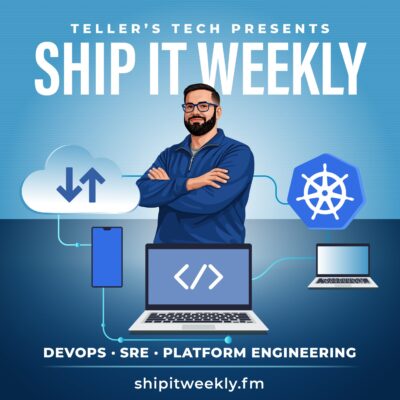
Ship It Weekly
Weekly commentary on incidents, launches, outages, security issues, and production lessons for teams who operate the systems everyone else depends on.
Recent evidence that supports the sponsor story
These proof points are intentionally narrow and source-backed. They are presented as recent snapshots, not as permanent claims about ranking, scale, or endorsement.
Built for signal, trust, and relevance
The value of Ship It Weekly is not mass-market scale. It is trusted access to a narrow, commercially meaningful audience of working engineers and technical leaders who care about production systems.
Operator trust
The show is hosted from a working-practitioner perspective, which makes sponsor messages land closer to peer recommendation than generic ad inventory.
Category relevance
Ship It Weekly is built for DevOps, SRE, platform and cloud engineering, infrastructure, and security-adjacent teams rather than broad consumer tech audiences.
Discovery beyond release day
Episodes, show pages, search presence, and clips keep working after the initial drop, which helps sponsors stay discoverable beyond one listen.
Multi-surface presence
Sponsors can show up across audio, video, website placement, episode pages, and the broader Teller's Tech / On Call Brief ecosystem.
Who this show is actually for
Ship It Weekly is intentionally narrow. The audience skews toward technical practitioners, reliability-minded teams, and the people who influence what gets adopted inside modern engineering organizations.
Estimated age signal
Directional audience data suggests the core listener base skews toward ages 25–44, which aligns well with working engineers and technical decision influencers.
Estimated gender mix
Directional podcast-audience tooling suggests a mix around 60% male and 40% female, which is more balanced than many technical media properties.
Regional concentration
Recent analytics and directional tools point to North America and Europe as the strongest listening regions for the show.
Recurring audience signal
Directional third-party audience data suggests recurring reach among technical listeners, supporting the show’s consistency with a niche B2B engineering audience.
Audience fit map
A conceptual view of where the show sits: high technical depth, high operational relevance, and strong alignment with teams who influence platform and tooling decisions.
Sponsorship surface graph
Sponsors are not limited to one isolated ad slot. The show can connect audio, video, site visibility, and adjacent owned-media touchpoints in a way that fits technical buying journeys.
DevOps and platform engineers
Operators looking for signal on CI/CD, cloud infrastructure, incidents, developer platforms, and the tooling choices that matter in production.
SRE and reliability-minded teams
Listeners who care about outages, operational lessons, resilience patterns, and the tradeoffs that show up once real systems are under load.
Technical decision influencers
Senior ICs, architects, and engineering leaders who evaluate tools, influence standards, and help shape what gets adopted across a team.
Security-conscious builders
The audience consistently overlaps with cloud security, software supply chain, identity, and platform-risk conversations rather than generic consumer tech.
More than a single host-read slot
Ship It Weekly is strongest when a sponsor message appears in the places technical buyers already spend attention: the show itself, the video companion, searchable episode pages, and adjacent owned-media surfaces.
Audio podcast
Host-read placement in the core weekly show for engineers who want concise signal on production systems and platform tooling.
Video episode
YouTube and companion video placement creates an additional sponsor surface for visual branding, links, and repeated exposure.
Owned web presence
Episode pages, sponsor-aligned landing pages, and searchable site content keep sponsor messaging tied to discoverable technical content.
Extended ecosystem
Short-form clips, LinkedIn-friendly amplification, and the adjacent On Call Brief property give the right sponsor more than one context to appear in.
What the show is covering right now
The catalog stays current with incidents, launches, security stories, platform tradeoffs, and production lessons. That keeps sponsor alignment tied to live engineering conversations instead of generic tech news.
AI Agents Get API Access and Identity: GitHub Copilot Cloud Agents, MCP Auth, Ansible Automation, OpenAI Daybreak, and the New Production Risk
This episode of Ship It Weekly is about AI agents moving from helpful coding assistants into real operational actors. Brian covers GitHub making Copilot cloud agent tasks available through a REST API, Auth0 bringing…
Cursor Deletes PocketOS Prod DB, .de DNSSEC Outage, Bluesky Postmortem, Argo CD, and Copy Fail
This episode of Ship It Weekly is about modern reliability getting squeezed from both directions. Old-school failures still hit hard, like broken DNSSEC, kernel privilege escalation bugs, and GitOps behavior changes. But newer automation…
Ship It Conversations: Gareth Kersey on IaCConf 2026, AI, and Corey Quinn’s Terraform Keynote
This is a guest conversation episode of Ship It Weekly, separate from the weekly news recaps.This episode is not sponsored. I wanted to cover IaCConf because the theme lines up closely with what Ship…
GitHub RCE, AI Agent Prompt Injection, and the New Reality: Your Developer Toolchain Is Production Now
This episode of Ship It Weekly is about the developer toolchain becoming part of production. Brian covers GitHub’s critical git push RCE, AI-assisted reverse engineering, prompt injection against AI agents in GitHub workflows, Elementary’s…
Kubernetes 1.36, Gateway API v1.5, AWS Copilot End of Support, and Cloudflare Non-Human Identities
This episode of Ship It Weekly is about platforms getting sharper about defaults, ownership, and the old paths they are no longer willing to quietly carry forever. Brian covers Kubernetes 1.36 and why it…
Ship It Conversations: Stephane Moser on Pipedrive’s Jenkins-to-GitHub Actions Migration, Argo CD, and CI/CD at Scale
This is a guest conversation episode of Ship It Weekly, separate from the weekly news recaps.In this Ship It: Conversations episode, I talk with Stephane Moser about Pipedrive’s move from Jenkins to GitHub Actions,…
The show also publishes supporting updates through show-news posts and owned web surfaces, which helps sponsor-aligned content stay discoverable outside the main episode feed.
Great for technical vendors. Not generic consumer ads.
The strongest sponsor fit is a product category an infrastructure, reliability, security, or platform team would actually evaluate, discuss, or trial in the course of real production work.
Best-fit categories
Why that matters
Ship It Weekly works best as high-trust technical inventory. The value is relevance, repeat exposure, and credibility with teams evaluating real infrastructure decisions.
- Better fit than broad, low-intent reach.
- Strongest when the sponsor solves a real problem for technical teams.
Single episode placement
Best for launches, experiments, or a first campaign with concise sponsor messaging across the episode and companion surfaces.
Multi-episode campaign
Better for recall, trust, and repetition. Technical audiences usually need to hear a message more than once before it sticks.
Custom ecosystem package
For strong sponsor fit, campaigns can pair podcast placement with video, site visibility, and adjacent owned-media touchpoints.
Public card rates for campaign planning
These rates set expectations for strong-fit technical sponsors. Multi-episode campaigns are preferred because repetition matters with engineering audiences.
Single episode
$750Best for launch support, first-time sponsor testing, or a focused one-week message.
3-episode campaign
$1,950A stronger default for technical buyers who need repetition, message recall, and more than one impression cycle.
6-episode campaign
$3,300Best for brands that want sustained category presence and repeated alignment with live production conversations.
What a typical package can include
- Host-read audio placement
- Video-version visibility when applicable
- Episode-page or show-note link placement
- Campaign fit review and copy collaboration
Selective sponsor fit
The goal is strong alignment with infrastructure, security, developer platform, and reliability products rather than generic creator-ad inventory.
Technical credibility matters
Sponsor messaging should sound like it belongs in an engineering conversation, with clear relevance to production systems and operational work.
Evergreen visibility beats hype
The show aims for repeated exposure through episodes, video, and owned web surfaces instead of one short-lived vanity spike.
Recent snapshots, not stale bragging
Public proof points should be recent, dated, and source-backed. Fuller current numbers, examples, and package details can be shared directly during sponsorship conversations.
Trusted because it sounds like it comes from someone who has been there

Brian Teller
Brian is the host of Ship It Weekly and the builder behind Teller's Tech, a media and training platform focused on DevOps, SRE, platform engineering, cloud infrastructure, and the real-world work of keeping production systems alive.
Brian started Ship It Weekly because most tech news says what happened—but not always why it matters to the people on-call when the headline becomes their incident.
Sponsor questions, answered
What kinds of sponsors fit best?
The strongest fit is B2B technical vendors in cloud, infrastructure, observability, platform engineering, security, CI/CD, and adjacent categories that solve real problems for production teams.
Do you offer custom packages?
Yes. The best campaigns are usually tailored around the sponsor's product, target audience, and whether the goal is awareness, launch visibility, or repeated presence across multiple episodes.
Why are there no stale download charts here?
This page prioritizes evergreen fit and carefully labeled proof points over vanity metrics that drift quickly. Where we do show time-sensitive data, it is framed as a recent snapshot rather than a permanent claim.
Can sponsors review copy or talking points?
Yes. The goal is a sponsor message that feels technically credible and aligned with the audience, not a generic script dropped into an engineering show.
Interested in sponsoring Ship It Weekly?
If your product serves DevOps, SRE, platform, infrastructure, or security-conscious engineering teams, we can shape a campaign that feels technically credible, aligned with the audience, and backed by current metrics shared in context.