On Call Brief – Week of July 12–18, 2026
This week's top stories
1. RedHook Android malware now uses Wireless ADB for shell access
- Category: Deep Dive
- What happened: The latest version of RedHook Android malware exploits the Wireless ADB feature to obtain shell-level access on devices without needing a physical connection to a computer. This method enhances its capabilities for unauthorized control over infected devices.
- Takeaway: This development poses a significant security risk as it allows malware to gain deeper access to Android devices, potentially leading to data breaches or unauthorized actions without user consent.
- Source: Bleeping Computer
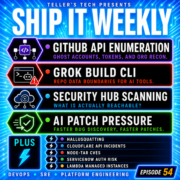
2. GitHub API Abuse, 'Ghost' Accounts Part of Malicious Efforts to Map Organizations
- Category: Community
- What happened: Attackers are actively exploiting GitHub's API by reactivating dormant "ghost" accounts (previously deleted or inactive user accounts) to conduct reconnaissance operations against organizations. These malicious actors are using the reactivated accounts to scrape public data, enumerate organizational structures, and probe private repositories for information. The attack technique is particularly dangerous because it mimics legitimate API traffic patterns, making detection through standard monitoring tools difficult. SRE teams should review GitHub audit logs for unusual API access patterns, implement additional monitoring for account reactivation events, and consider restricting API access through rate limiting or IP-based controls to detect reconnaissance attempts against their repositories.
- Worth reading: Increased risk of data exposure and potential breaches due to undetected reconnaissance activities. Organizations should enhance monitoring and detection capabilities for API usage to mitigate these threats.
- Sources: DevOps.com
3. GitHub API Abuse, ‘Ghost’ Accounts Part of Malicious Efforts to Map Organizations
- Category: Community
- What happened: Coordinated campaigns are exploiting GitHub's API using dormant 'ghost' accounts to scrape public information and potentially compromise private repositories. These operations involve automated tools and leaked credentials, posing a significant threat to organizations' security. The ease of access to public data without authentication allows attackers to map organizations effectively, increasing the risk of credential phishing and malware delivery. The trend of malicious campaigns targeting Git repositories has been rising, with GitHub being the primary focus.
- Worth reading: Organizations using GitHub should be aware of the increased risk from these coordinated attacks, especially regarding the exposure of public repositories and the potential for private data compromise. Implementing stricter access controls and monitoring for unusual API activity may be necessary to mitigate these threats.
- Source: DevOps.com
4. xAI's Grok Build CLI transmits the contents of the files it reads to xAI verbatim and unredacted
- Category: Community
- What happened: xAI's Grok Build CLI tool sends complete, unredacted file contents to xAI's servers when processing code, potentially exposing entire repositories including sensitive data such as credentials, API keys, configuration files, and proprietary source code. SRE and DevOps teams should immediately audit any usage of the Grok Build CLI in their environments, review what data may have been transmitted, and establish controls to prevent its use on systems containing sensitive information until xAI implements proper data filtering or local processing options. Organizations should treat this tool similarly to other third-party code analysis services and ensure it is only used with sanitized, non-production codebases that do not contain secrets or confidential business logic. Teams using the CLI should implement pre-commit hooks and secret scanning tools to detect and prevent accidental exposure of sensitive data through this vector.
- Worth reading: This behavior raises serious security and compliance issues for organizations using the Grok Build CLI, as it could lead to unintentional data leaks. Operators should be cautious about using this tool with sensitive data.
- Sources: GitHub via TLDR AI, Orkes via TLDR AI
5. AWS Security Hub now offers Network Scanning to identify publicly reachable resources
- Category: Community
- What happened: AWS Security Hub has introduced a Network Scanning feature that identifies publicly reachable resources, including exposed S3 buckets. This service scans from the internet, similar to how attackers would, and is provided at no additional cost.
- Worth reading: This feature can help operators identify and mitigate security risks by revealing exposed resources that could be targeted by attackers - it enhances visibility into potential vulnerabilities in AWS environments.
- Source: AWS via Last Week in AWS
6. AWS Security Hub adds impact analysis for exposure findings
- Category: Community
- What happened: AWS Security Hub now includes impact analysis for exposure findings, allowing users to visualize attack paths from over-permissioned IAM principals to exposed resources. This feature highlights the potential risks associated with misconfigured permissions in the infrastructure.
- Worth reading: This update emphasizes the importance of managing IAM permissions effectively, as it can help identify and mitigate security risks stemming from over-permissioned roles. Operators should review IAM policies to prevent potential incidents.
- Source: AWS via Last Week in AWS
7. Signal Phishing and Russian Intelligence Targeting Messaging Apps
- Category: Deep Dive
- What happened: Russian intelligence is targeting users of Signal, WhatsApp, and Telegram through phishing and account theft methods rather than breaking encryption. The article discusses an FBI warning and a $10 million bounty for information related to these threats, highlighting the importance of security for users of encrypted messaging apps.
- Takeaway: Operators should be aware of the increased phishing risks associated with encrypted messaging apps, which could lead to account compromises and data breaches. Implementing stronger user education and security measures is essential.
- Source: Security Boulevard
8. Microsoft Warns AI Will Bring More Windows Patches and Faster Deadlines
- Category: Community
- What happened: Microsoft is warning enterprise customers to prepare for an accelerated Windows patching cadence, with more frequent security updates and compressed deployment timelines driven by AI-enhanced vulnerability discovery. The company states that AI capabilities are enabling both security researchers and threat actors to identify exploitable defects more rapidly, reducing the window between disclosure and active exploitation. SRE and operations teams should review and optimize their patch management workflows, automation tooling, and change control processes to handle shorter response windows while maintaining stability. Organizations running Windows infrastructure should assess whether their current patching schedules, testing procedures, and deployment automation can accommodate faster turnaround requirements without introducing operational risk. This guidance comes from Microsoft's direct communications to enterprise customers.
- Worth reading: Operators should prepare for a potentially increased workload related to Windows patch management as AI technologies evolve, necessitating quicker responses to security vulnerabilities.
- Sources: Security Boulevard Newsletters
9. Your Encryption Has an Expiration Date: France Turns Quantum Risk Into Procurement Law
- Category: Community
- What happened: France has enacted a procurement law requiring organizations to address quantum computing risks to encryption systems, representing the first national legislative approach to mandate quantum-safe cryptography considerations in procurement decisions. The law forces organizations to evaluate the effective expiration date of their current encryption methods against the timeline when quantum computers could break them through algorithms like Shor's algorithm. SRE teams operating infrastructure for French entities or handling French data should begin inventorying cryptographic implementations across their stack, prioritizing systems with long data retention periods that could be vulnerable to "harvest now, decrypt later" attacks. Organizations should start planning migration paths to post-quantum cryptography algorithms, particularly for systems involving multi-year data lifecycles, and monitor NIST's post-quantum cryptographic standards (finalized in 2024) for implementation guidance.
- Worth reading: Organizations may need to evaluate and update their encryption practices to comply with new procurement laws in France, which could affect their security posture and procurement processes.
- Sources: Security Boulevard Newsletters
10. DevOps'ish 317: Januscape Turns 16, etcd Hits 3.7, and More
- Category: Community
- What happened: etcd v3.7.0 has been released with significant changes that SRE teams managing Kubernetes clusters should evaluate before upgrading. The release introduces a new RangeStream API designed for streaming large result sets, adds keys-only range capabilities, and implements faster lease optimizations to improve overall performance. The most critical change is the complete removal of the legacy v2 store, which means any applications or configurations still relying on the deprecated v2 API will break upon upgrade. Operators should audit their etcd clients and Kubernetes configurations to ensure compatibility with the v3 API before deploying this version in production environments. This information was reported by DevOps'ish.
- Worth reading: The release of etcd v3.7.0 may require updates to Kubernetes clusters to leverage the new features and optimizations. The KVM vulnerability requires immediate attention for those managing virtualized environments with untrusted tenants, as it could lead to severe security breaches.
- Sources: DevOps'ish
CVE & Security
11. iCagenda and Balbooa Forms Joomla Flaws Reportedly Exploited as Zero-Days
- Category: Security / Patch
- What happened: Two critical security vulnerabilities in iCagenda and Balbooa Forms for Joomla have been added to the CISA's Known Exploited Vulnerabilities catalog due to reports of active exploitation. Both vulnerabilities have a CVSS score of 10.0, indicating their maximum severity.
- Do this Monday: These vulnerabilities pose a significant risk to any systems using the affected Joomla extensions, potentially allowing attackers to exploit them if not patched promptly.
- Source: Thehackernews via The Hacker News (security)
12. Microsoft Issues Emergency Patch for RoguePlanet Windows Defender Zero-Day
- Category: Security / Patch
- What happened: Microsoft has released an emergency security patch for a high-severity zero-day vulnerability in Windows Defender, identified as RoguePlanet (CVE-2026-50656). This vulnerability allows attackers with local access to escalate privileges to SYSTEM-level, granting full control over the affected Windows devices.
- Do this Monday: This patch addresses a critical security issue that could lead to significant breaches if exploited. Operators should prioritize applying this update to mitigate risks associated with local privilege escalation on Windows systems.
- Source: Security Boulevard
13. ServiceNow’s requires_authentication=false
- Category: Security / Patch
- What happened: ServiceNow released a REST endpoint that had authentication disabled, allowing attackers to access customer data without needing credentials. The company was aware of this vulnerability since April.
- Do this Monday: This incident highlights a significant security oversight that could lead to unauthorized access to sensitive enterprise data - operators should review their own authentication practices and monitor for similar vulnerabilities.
- Source: Security Boulevard
14. Unauthenticated RCE in Motorola's MR2600 Router
- Category: Security / Patch
- What happened: A critical vulnerability has been identified in Motorola's MR2600 router that allows for unauthenticated remote code execution (RCE). This issue poses a significant security risk as it can be exploited without any authentication, potentially allowing attackers to take control of the device.
- Do this Monday: Operators using the MR2600 router should prioritize patching this vulnerability to prevent unauthorized access and potential exploitation of their network.
- Source: Mrbruh via Lobsters
- Discussion: https://lobste.rs/s/s1jwea/unauthenticated_rce_motorola_s_mr2600
15. CVE-2026-59874 node-tar: Negative tar entry size causes infinite loop in archive replace
- Category: Security / Patch
- What happened: A vulnerability in node-tar (CVE-2026-59874) allows for a negative tar entry size, which can lead to an infinite loop during archive replacement. This could potentially cause denial of service in applications using this library.
- Do this Monday: This vulnerability may affect applications that utilize node-tar for handling tar archives, leading to potential service disruptions if exploited.
- Source: Microsoft MSRC Security Update Guide
16. CVE-2026-59873 node-tar: Decompression/parse DoS via unlimited input
- Category: Security / Patch
- What happened: A new vulnerability has been identified in node-tar, which allows for a denial of service (DoS) through unlimited input during decompression and parsing. This could potentially affect applications using this library.
- Do this Monday: This CVE could lead to service disruptions if node-tar is used in production environments without proper input validation. Operators should assess their use of this library and apply any necessary mitigations.
- Source: Microsoft MSRC Security Update Guide
17. CVE-2026-59871 node-tar: Process crash via PAX numeric path type confusion
- Category: Security / Patch
- What happened: A vulnerability identified as CVE-2026-59871 in the node-tar package can lead to a process crash due to confusion in the PAX numeric path type. This issue requires attention to prevent potential disruptions in applications using this package.
- Do this Monday: This CVE could affect production systems relying on node-tar, leading to unexpected crashes if not addressed. Operators should evaluate their usage of this package and apply necessary patches.
- Source: Microsoft MSRC Security Update Guide
18. HalluSquatting' Compromises AI Coding Agents to Install Malware, Create Botnets
- Category: Security / Patch
- What happened: Security researchers have identified a new attack vector called "HalluSquatting" where threat actors exploit AI coding assistants' tendency to hallucinate non-existent software packages, tricking them into recommending malicious dependencies that attackers have registered with those fabricated names. When developers or automated AI agents follow these hallucinated recommendations, they inadvertently install malware that can create botnets and compromise systems. SRE teams using AI coding assistants should implement package verification processes, maintain allowlists of approved dependencies, and review all AI-suggested packages against official repositories before installation. Organizations should also audit existing codebases for any dependencies that may have been added through AI suggestions to identify potential compromises from this attack pattern.
- Do this Monday: This tactic could lead to increased security vulnerabilities in systems using AI coding agents, potentially affecting production environments that rely on such technologies - operators should be vigilant about the security implications of integrating AI tools.
- Sources: DevOps.com
19. ▶ Securin Researcher Maps AI's Zero-Day Surge
- Category: Security / Patch
- What happened: A Securin researcher has documented that AI-driven vulnerability discovery tools are now identifying zero-day vulnerabilities at a rate that significantly exceeds the capacity of traditional CVE assignment processes and vendor patch SLAs to keep pace. The analysis from Techstrong Brief indicates this acceleration creates a growing gap where newly discovered vulnerabilities remain unpatched for extended periods because existing vulnerability management workflows were designed for slower, human-driven discovery timelines. SRE teams should anticipate longer windows of exposure between public disclosure and patch availability, particularly for products where vendors maintain standard 30-60 day patch cycles. Organizations should consider implementing additional compensating controls such as enhanced monitoring, network segmentation, and runtime application self-protection (RASP) to bridge the gap until patches become available for AI-discovered vulnerabilities.
- Do this Monday: The accelerated pace of zero-day discoveries due to AI may lead to vulnerabilities being exploited before patches can be applied, necessitating a reevaluation of patch management strategies and response times.
- Sources: Techstrong Brief
20. RHSA-2026:38487: Important: xorg-x11-server security update
- Category: Security / Patch
- What happened: An important security update for xorg-x11-server is now available for Red Hat Enterprise Linux 8, rated as having a significant security impact. Detailed severity ratings are provided via the CVSS base score linked to the CVEs.
- Do this Monday: This update addresses vulnerabilities that could affect the security posture of systems running Red Hat Enterprise Linux 8, necessitating timely application of the patch to mitigate risks.
- Source: Red Hat Security Advisories (RHSA)
21. RHSA-2026:38489: Important: xorg-x11-server-Xwayland security update
- Category: Security / Patch
- What happened: An important security update for xorg-x11-server-Xwayland is now available for Red Hat Enterprise Linux 10. This update has been rated as having a significant security impact, and detailed severity ratings are provided through the CVE links.
- Do this Monday: This update addresses vulnerabilities that could potentially affect the security posture of systems running Red Hat Enterprise Linux 10. Operators should prioritize applying this update to mitigate risks.
- Source: Red Hat Security Advisories (RHSA)
22. RHSA-2026:38499: Important: openexr security update
- Category: Security / Patch
- What happened: An important security update for openexr has been released for Red Hat Enterprise Linux 10, rated as having a significant security impact. Detailed severity ratings are provided via the CVSS base score linked to the associated CVEs.
- Do this Monday: This update may require immediate attention to mitigate potential security risks in production environments running Red Hat Enterprise Linux 10 with openexr.
- Source: Red Hat Security Advisories (RHSA)
Releases
23. Eliminating Java cold starts with AWS Lambda Managed Instances
- Category: Release
- What happened: AWS has introduced Lambda Managed Instances to eliminate Java cold starts by maintaining JVM persistence across invocations, which enables JIT compiler optimizations that reduce median latency by 18-30% according to the AWS Compute Blog. Separately, the AWS Networking Blog details an automated solution for expanding VPC CIDR blocks to prevent IP exhaustion during traffic spikes, using a combination of AWS IPAM, CloudWatch, Step Functions, Lambda, and DynamoDB. SRE teams running Java workloads on Lambda should evaluate Managed Instances for performance-critical applications where cold start latency is a concern. For operators managing high-traffic VPCs approaching IP exhaustion, the automated CIDR expansion pattern provides a proactive alternative to manual intervention during capacity events.
- Do this Monday: The introduction of AWS Lambda Managed Instances could significantly enhance the performance of Java-based serverless applications, particularly those with strict latency requirements. This change may reduce the likelihood of SLA violations and improve user experience by minimizing cold-start delays.
- Sources: AWS Compute Blog, AWS Networking Blog
Lightning links
- Meet Brain, the AI that decides when Azure is officially down (The New Stack) -- Microsoft's new AI system autonomously monitors Azure's health and declares outages.
- OpenTofu 1.12.0 Is Here, and It Finally Fixes These Real-World Headaches (env0 Blog) -- The latest OpenTofu release addresses key issues like environment-aware destroy protection.
- Cloudflare Identifies Race Condition in hyper’s HTTP/1 Implementation (InfoQ DevOps) -- A rare bug in the Rust HTTP library hyper has been identified and resolved by Cloudflare.
- Vercel Now Lets You Deploy Any Dockerfile Straight to Production (Techstrong Brief) -- Deploy any Dockerfile as a serverless function with Vercel's new feature.
- Untangling the EU Cyber Resilience Act (Techstrong Group) -- This article outlines the implications of the EU Cyber Resilience Act for cybersecurity compliance.
- env zero Launches CloudQuery Insights to Eliminate Manual Cloud Investigation (env0 Blog) -- CloudQuery Insights helps platform teams by aggregating cloud signals for better investigations.
- Model caching for AI workloads on GKE/Kubernetes without re-downloading weights (Reddit r/devops) -- Using node-local storage can significantly reduce startup time for AI workloads on Kubernetes.
- Where is the line for automated agents fixing CI failures? (Reddit r/devops) -- A community discussion raises concerns about the reliability of AI agents in handling CI failures.
Human Stories
The Grok Build CLI incident perfectly captures what we're seeing across almost every story this week: our tools are becoming attack surfaces faster than we can map them. GitHub's ghost accounts and Wireless ADB exploitation both show attackers turning utility features into reconnaissance vectors, while AWS's new Network Scanning capability exists precisely because we've lost track of what we've exposed to the internet. What strikes me most is how the Russian intelligence operations targeting Signal users demonstrate that when direct technical attacks prove too difficult, adversaries simply move to the integration points and human layers we've left undefended. We're building increasingly sophisticated security controls for our infrastructure while the actual breaches are happening through API abuse, developer tooling that phones home, and social engineering against the very communication channels we use to coordinate incident response.
Also worth reading
The Post-Incident Review Meeting: three meetings in a trench coat (SRE Weekly)
This post provides an in-depth analysis of a major incident that occurred at Honeycomb in December, expanding on the interim report previously shared. It discusses the exercises, cleanups, and evacuations that took place during the incident response, offering valuable insights into the incident mana
Where is the line for automated agents fixing CI failures? (Reddit r/devops)
The discussion revolves around the implementation of AI agents to handle CI failures. The author expresses concern about the reliability of such agents, particularly regarding their ability to accurately diagnose issues and propose fixes without human oversight. They seek input on what safeguards sh
The Post-Incident Review Meeting: three meetings in a trench coat (SRE Weekly)
The article discusses the structure and purpose of post-incident review meetings, emphasizing the importance of conducting thorough exercises, cleanups, and evacuations to improve incident response. It highlights common pitfalls and suggests best practices for effective meetings that foster learning