Try reloading the player or open this episode directly on YouTube.
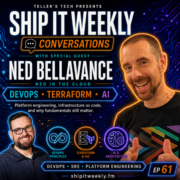
In this episode, Mike Lady discusses day two readiness and the importance of guardrails in the AI era. He explains how effective guardrails can enhance safety and predictability in code delivery, especially as AI-generated code becomes prevalent.
Now Playing
Ship It Conversations: Mike Lady on Day Two Readiness + Guardrails in the AI Era
Ship It Weekly
0:0034:38
Chapters
Jump to a section in this episode.
Speed & share
Transcript
AI can crank out code fast now. The part that's
not speeding up is our ability to ship it safely.
And if you don't have guardrails, you are basically
just moving failures faster. Hey, I'm Brian.
I work in DevOps and SRE, and I run Tellers Tech.
Ship It Weekly is where I filter the noise and
focus on what actually matters when you are the
one running infrastructure and owning reliability.
Most weeks, it's a quick news recap. In between
those, I do interview episodes with folks who
are actually building and operating real systems.
Today is one of those interviews. I'm joined
by Mike Lady, a senior DevOps engineer and the
creator behind Enterprise Vibe Code on YouTube.
Mike's deep in distributed systems, and we're
talking about day two readiness, guardrails,
and why that stuff matters even more now that
AI can generate code fast. We get into what day
two readiness means in plain English. the symptoms
you see when teams ship without guardrails, what
a real day -two audit looks like, and how Mike
thinks about AI can write code, but it can't
ship safely without gates. We also talk about
AI agents watching builds, branch protection,
quality gates, and where the line is between
AI -assisted development and AI taking actions
in production. All right, let's jump in. Today,
I'm joined by Mike Lady, a senior DevOps engineer
from Enterprise Vibe Code on YouTube. He's focused
on distributed systems. And we're talking about
day two readiness, guardrails, and why the ability
to ship safely matters even more now that AI
can generate code fast. Mike, thank you for joining
me. Thanks. Thank you for having me. So I'm curious,
give me your thesis on why do guardrails matter
more than good code? I feel like it's a kind
of... process like we we can we're constraining
people and ai to create like uh code that meets
the bar meets a certain standard i feel like
these it's the it's basically the same thing
a human generated code ai generated also all
go into the same like pipeline all go into the
same like build test deploy phases right so i
feel like people are freaking out like making
a big deal out of this when we have the same
system for people as we do for AI code, right?
And ultimately it's people reviewing and approving
this code anyway, right? So I feel like this
is, I don't know, we're in the same thing. We're
still doing the same thing and we can do it even
better now in the age of AI -aided development
or five code, whatever you want to call it. People
like to call it different things. So for sure,
yeah. So what do you what is day two readiness
mean in plain English for people out there that
may not know the term or understand the meaning
behind it? At least for for what how I'm talking
about is like day zero is like you don't have
an app. You just have an idea. Day one is you
launch the app. You go from zero to one. You
launch the app. Hooray. You you have something
on the Internet that people can use. And the
day two is the part that comes after that. It's
like. How do we maintain this long term? How
do we add new features? How do we fix bugs? How
do we add security updates and whatnot? Like,
how do we change the app over time and maintain
it? Because it's one thing to go from zero to
one, make it, and that's like the first part
of the work. It's a much longer, much more long
tail of work after day two, basically. Yeah,
for sure. So what symptoms do you see when teams
don't have guardrails, typically? They just pray.
They put code into production and just hope that
it works. There's some famous quote, it's like,
hope is not a strategy, right? You want to be
able to try to prove out that this code that
you make is as correct as possible. So if you
don't have guardrails, you're going to have weird
bugs, you're going to have features that just
completely get deleted or something like that,
or just don't work. Your users are going to be
pissed. It's just not a good thing to just kind
of ship, like merge directly to main and then
ship that directly to prod and just blindly do
that. Yeah. So do you think that guardrails end
up slowing teams down or speeding them up? It's,
yeah, ultimately speeding them up. People who
are like really... I don't know, early startup
run and gun. They're going to feel like, oh,
it feels like it feels slow. It's more process.
Like we can't get things done. Like we have to
fix the tests. But like now in the age of AI
driven development, vibe coding, it's like the
AI can do all the hard stuff for you. Like it
can like write the tests. It can fix the tests.
It can. do all the stuff that you don't want
to do. And then you can focus on the stuff that
you don't want to, you want to focus on with
features and whatever bug fixes that you want
to do and kind of product development. We get
to operate at a higher level now rather than
dealing with the build breaking, right? Like
we could just say, like my favorite thing to
do with AI agents is to have it watch the PR
build and it monitors it. It sees the, whatever,
the break, like whatever. thing it fails on and
then goes and tries to fix it. And just it goes
off in its own loop and just works to make the
build pass. Of course, I need to check the code
to make sure it doesn't like just delete the
test to make the build pass. Right. But like
there's a certain like abstraction or certain
like like I'm giving the agent a little bit more
control autonomy. I'm delegating the boring developer
task of, all right, fix the build. type of thing
so i think i got a little off track of what you're
going but no no speed up versus slow down yeah
so ultimately it speeds you up because you're
not dealing with all the failure like all the
bugs that crop up if you don't have guardrails
so yeah i i think too it goes back to like the
whole philosophy between but behind iac like
slowing down to speed up yep to a certain degree
but even that barrier is gone now to a certain
degree with ai but yeah i've also run into ai
agents saying oh you need this test to pass no
matter what okay i'll just remove the test or
i'll just have it return one it passed see aren't
you happy right exactly yep for sure yeah ai
agents will lie cheat and steal to make their
reward function happy and that that's a steve
yeagy quote i'm a yeagy fan boy from uh he has
a book and her book vibe code vibe coding highly
recommend it written with gene kim gene devops
god right absolutely yeah so that that's why
i like inherit like why i'm working like i'm
a big like stevie like beads fan and his newest
thing gas town i'm a contributor on it now it's
uh yeah i'm super hyped on it cool anyways awesome
so walk me through what you check in like a day
two readiness audit like what would be like your
checklist like your top i don't know three things
that you would check right so are you properly
using source control is it like Okay, you're
using Git probably because everything's on GitHub.
Hopefully. Hopefully, yeah, right? Hopefully.
Okay, are you using branches? Like, are you just
pushing the main? Are you using PRs on GitHub,
right? Like, and are you blocking those PRs with
quality gates? That's kind of the next thing.
Like, do you have a... Is main protected? Branch
protection. Yeah, branch protection. Make sure
the agent doesn't cheat and just pushes it straight
to main, right? And you actually have to go through
all the quality gates on the PR to make sure
it passes and you can merge into main. So that's
like source control and then quality gates. It's
like, okay, does it build? Does it test different
levels of tests, like your unit integration,
functional? Again, all these tests are essentially
free now. like they just cost tokens like they
don't cost developer time right so it's that's
why i'm so like excited about this idea is like
before with when i was i'm still devops but like
when i first uh started doing devops i was got
into through the like testing i was kind of like
a ui automator first and then they were like
oh how are we going to orchestrate these ui tests
it's like oh okay wow grow into a DevOps role
for Mac. It was actually iOS DevOps. So I was
mobile DevOps first. And we were racking Mac
minis and running these UI tests, making sure
the app doesn't break. But it was a pain in the
ass to maintain those tests, right? Everyone
knows UI tests most brittle. The things on the
screen change. You click the button. Maybe you
have to click it again because the click didn't
send through or whatever. Like there's all kinds
of things where UI tests are like very flaky
in general. But now, Like you can just tell it
to update it and it'll do it right. And it'll
probably fix it in a way that's satisfactory.
So that's why I'm so like hyped on this testing
quality gate type of thing. Plus like you can
run like test driven development. So you can
like have the AI write the test first and then
it writes the implementation to pass, make the
test pass. So I think it's a huge like boon to
all these like methodologies that we all know
we should. have been doing like TDD this whole
time. Like, like whatever, for 20 years, I don't
know how long TDD has been around, but like I
first learned about it in college and I've never
done it until now. Test driven development. Yeah.
Yeah. Test driven development. Yes. Yeah. So,
so yeah, that's like the, whatever the quality
gates, the second thing, config and secrets management.
Like, are you like for, for me, I have like a
demo app that lives in GitHub. I store all the
secrets. uh in the git uh not the git repo in
the like configuration for the repo and it has
like a little secrets place or whatever for it
but for um adbs there's secrets management for
all these other things have like very specific
ways to handle secrets because like that you're
gonna have api keys you're gonna have uh things
that you need to like connect to or whatever
and deploy to so we want to handle those properly
so those are And I'll throw in a bonus fourth
thing, like deployment model, like how, how do
you deploy? Do you like deploy to like a staging
environment first? And then do you like test
against that staging environment? Then once that,
that test is good, like, do you deploy to prod
after that? So like having some sense of like,
like test deploying the thing, whether that be
on a PR, whether it be on a staging environment,
making sure those. We deploy it somewhere first
and ensure that everything comes up before just
deploying straight to prod and then breaking
prod. Yeah, I think there's certainly a case
to be made for testing in prod with the right
feature flags and the right segmentation where
you could do 1 % or 0 .01 % of traffic, but certainly
not day one, day two, day three. You need to
have a mature practice before you're able to
sign on to that. Right. Yep. Exactly. Okay, so
jumping, we've talked a little bit about AI.
So jumping into the AI coding, guardrails. So
you have a couple posts on LinkedIn where you
talk about AI can write code, but it can't ship
it safely without guardrails. What does that
actually look like in practice? We talked a little
bit about this already, but I'm just kind of
curious. What's your philosophy behind that?
Do you treat AI as like a junior developer or
junior engineer that you... build gates on or
what gates do you insist with that AI agents?
Yeah. So it's a process. So like we have a whole,
like we kind of have to force it to go down a
path and you do a process. So like that's at
the, like we have the same gates at the PR level
for everyone, right? For human generated code
or AI generated code. But even before that, I
have kind of a, kind of like a plan, like have
it plan itself. have other agents look at the
plan and comment on the plan using like stevie's
beads framework but like you could probably do
it with other things but and then kind of like
think about the plan given those other comments
like is these agents aren't even necessarily
like the same it's not just claude like i use
claude gemini codex whatever else is out there
cursor with like rock or something like that
like i i think all these different um models
are kind of different perspectives. They're all
trained a little bit differently. Yeah, they
may be all trained on the internet in general,
but like they all have like different, a little
bit different perspectives. So I treat those
as like a team that kind of like review the plan.
And with beads, at least like it can comment
and it's non -destructively adding to the plan,
like adding different perspectives to the plan.
So it's a beads is like a issue tracking, but
for agents where. It's kind of like Jira, you
know, like you get a Jira, you can comment on
the Jira, you can like help people like work
through like making the Jira better or whatever,
right? And in a non -destructive way without
just saying edit and whatever, completely changing
the source material, right? Like without changing
the description box, say. Adding comments is
kind of like a way to give your perspective,
give your take without. completely changing the
original material. So there's the plan phase.
This is kind of like the process guardrail. Plan
phase, implementation phase, I have like a belief
that you should probably use like one model or
one agent as a daily driver. Like you know that
agent in and out. Like mine is Claude, but it
could be anything. If you're comfortable with
Cursor and you know how Cursor responds or whatever.
You learn its quirks. Yeah. Yeah. You learn how
it's what it tends to do when it when it tries
to lie, cheat and steal. You learn when what
it yeah, when it tries to take shortcuts and
you can recognize that right away. So you implement
with your daily driver and then you can review,
like make a PR and then have all those same agents
that like did the planning with you do the PR
review and they can all like I forgot a step
in the. the the planning is like you incorporate
those comments from those other agents into the
plan right and then in the pr review you can
say all right take a look at the pr take a look
at the the beads the issues and see like how
well does it like implement the plan and is there
anything that's missing or are there any issues
like security issues or perform it like you can
have it come at different angles so that's all
like before we enter our like main pipeline So
that's like a pipeline within itself, a pipeline
within like the implementation. I have implementation
as like a stage name, but like in the AI agent
driven development process, I guess. So I would
say that that's like a guardrails, but like human,
the shaping that we do, like when we're interacting
with the AI. Are you setting? Yeah, that makes
sense. Do you? Are you setting specific like
pre -prompt personalities, personas, or are you
just relying on like Opus and Sonnet and Gemini
like to have their different personality traits
because of their training, their LLM training?
Yeah, I'm just going with the kind of the base
model. A lot of people like to play house. This
is not my quote, but like I'm taking this from,
I think this dude from Human Layer, his name
might be Dax or something. I saw. he was giving
like a talk youtube video if you search like
human layer dude on on youtube uh you'll probably
find it and he says like oh yeah people like
to play house and have their their teams of agents
with their their dev and their qa their manager
their product manager their you're like it feels
like you're doing uh i don't know like theory
crafting like you're you're playing dnd you're
the expert like whatever with 20 years experience
it's like do you really need to hype the agent
up that much? Or is the, is the model, is the
stuff already in the model? Yeah, exactly. By,
by asking it, it can, you like review the security.
You don't need to prompt it as you're a security
researcher. You're a security engineer. Yeah.
It's like, you're only, you're kind of obfuscating
what it can do at that point too, because you're,
you're, you're narrow cat, like narrowing what
it's, what it's pulling from or what it can.
Yeah, for sure. So yeah, no, I, I think, yeah,
I just use the, as vanilla as possible. the models
so okay just curious then do you notice you would
mention as we use more model different models
we notice that there's traits when they lie cheat
and steal what's your take on obviously the landscape's
always changing but what's your take on models
right now like is there a specific model that
oh this is well and above great for devops versus
this one isn't great for devops or cic cic right
yeah uh i use claude mostly like that that's
like a good general I mean, all of them are coding
models, but like it seems to be like pretty,
like pretty good. But I do like when I do Codex,
Codex seems very thorough when it does its reviews.
It always takes the longest. Gemini seems to
like be really quick and like it gives some good
feedback or whatever, but like Codex seems to
take its time and really like analyze what's
going on. It really goes through like the issue
and usually has some pretty good feedback. So
yeah. I think they're all pretty valuable. So
big tech, big AI doesn't want you to know that
you can use all of them, that you can use all
of them together. Like all of them just want
all of your tokens, right? Quad wants all of
your enterprise's tokens, like Gemini or OpenAI,
whoever. They want your entire token budget.
But if you can, I don't know, spare the $20 a
month for multiple providers. I know it's hard
out there. I know, I know. whatever, tough economy
and whatnot, but like I view spending on AI is
learning. Like you're investing in yourself.
You're, you're this as a developer, this is where
the industry is going. And I, I'm never going
to, I'm hopefully never going to write another
line of code. I'll say that every day and I'll
still end up writing a couple of lines here and
there, but like it's the, the probability is
becoming less and less every day. Right. So.
Yeah, you're the manager or the, I guess, the
senior working with the junior that's actually
doing the work. So Cursor even has the ability
now to run multiple models at the same time.
Right. And I think you can even do multiple iterations
or runs of the same prompt and verify the output.
To be fair, it's on my Cursor. I don't use it.
I haven't used that yet, but I have used like
the multiple models to kind of see which is best
for. And it depends. I mean, it's everyone always
wants to use the max model, you know, because
they always think that their problem is the most
important deep thinking problem. Yeah, that's
generally not the case. Yep. Generally, you can
be you can do quite well with just using auto
or even just using their auto and their their
switcher is actually really good. They're being
able to switch models and let them decide which
model to use actually works out really well.
I mean, they are seeing whatever. millions of
requests a day. So they probably know what they're
talking about, right? You mentioned things like
CICD, branch protections, and agents .md. How
do these fit together? How do they fit together?
Okay. So the agents .md is kind of like your
implementation. Like how is the agent on your
computer going to act? How is it going to...
It's kind of like the base instructions for...
how you operate with it on your computer, right?
So then agents to AMD are kind of like the guardrails
on your laptop, what you are trying to steer
your agent to do as long as it can remember.
Like when you run out of contacts, you're, yeah,
it's bound to forget stuff, right? But yeah,
agents to AMD is kind of like guardrails on your
computer. You steer towards the problem. You're
trying to solve the problem. You can have like...
There's new things out there that you can have
agent orchestration where you have multiple agents
running in parallel. They're all trying to like
solve different problems potentially on your
laptop. You open up all these different PRs and
then the CICD pipeline guardrails kind of take
over from there. And then you try to make your
builds pass and hopefully you don't like, but
you have good enough tests, good enough like
code coverage. too like that's another big one
is like there's like no excuse to not have 80
code coverage now like it's tests are free they
just cost tokens so i feel like the the cicd
pipeline blocks like basically code but that
doesn't work with your existing tests and you
can gate the kind of like the code coverage part
and say oh it has to be above 80 if you're adding
a bunch of code and you gate on 80 and it goes
below 80 it can require hey you have to add tests
like a heart like A hard requirement, you're
not allowed to merge until you have a certain
level of testing. And then, oh, branch protection.
Yeah, so you don't, like, merge, like, commit
directly in main. Like, that's, like, the worst
offense is, like, from your developer laptop,
you merge directly in main, you, whatever. Potentially,
it goes out to production, but you probably,
it probably won't because, like, if you don't
have CICD pipelines, then you probably wouldn't,
like, have branch protection to produce. to begin
with. I mean, I guess you could. Like, if you
know CICD pipelines, I don't know why you wouldn't
have branch protection, but, like, yeah. These
are just all kinds of, like, multi -dimensional
guardrails to, like, steer and kind of, like,
put your agent on rails and go in the direction
that you want it to go. Absolutely. What do you
think the line is between AI -assisted development
and AI takes action in prod? Ooh, yeah. Like,
so, I've done it myself for my little test app,
and, like, it's... Like, I don't care. Like,
I've got node users right now. Like, I can let
it do stuff in my AWS account and it solves things
pretty quickly. Like, it's pretty nice to have
it give it, like, access to my AWS account. It
looks at all the logs and, like, honestly, I'm
not that, like, I'm not great at AWS. Like, I
don't know all the terminology or even whatever,
but, like, I'm deploying this app with Terraform
into multiple AWS accounts and I have, like,
basically a... dev AWS account and prod AWS account
and I'm kind of like segregating it in that way
and yeah if I have like some issue like it didn't
this was an issue that was having was it wasn't
cleaning up so it deploys as a lambda it whatever
tears down it wasn't tearing everything down
it was the ENIs were sticking around for some
reason and I was like all right just look at
the AWS account and see like what why were they
sticking around and it uh made some like github
action like cleanup uh job that like ran afterwards
to like make sure everything was cleaned up so
uh again like i'm this is some people might scoff
at that people may be like oh you don't actually
know the real cause or whatever i'm like well
but like the agent will know the real cause and
like i'm kind of delegating that like you wouldn't
know the real cause of like i don't know if you're
a senior developer and then your junior developer
on your team does something and it works, like,
yeah, you can kind of see how it works, but you
weren't the one writing the code, right? Like,
ultimately, we're delegating some amount of responsibility
to other developers. And this is just one more
step. We're delegating to a developer on our
computer. So I feel like people have this. sense
of they're losing control or they're losing like
like they're almost like identity like their
sense of importance as a developer of just of
knowing things if they delegate it out they're
like what do i do you just get up leveled right
like you you're you're now a manager like you
you you are now responsible you are still responsible
for the quality and what comes out like you're
still the one approving pr merging it so of course
you have to like kind of know what it looks like
you you have to kind of know what's going on
but I don't know for my small little test app.
Like, yeah, I don't really know what's going
on, but like for, so assisted development, totally.
Everyone should be using it for touching prod.
Yeah. Depends like maybe read only potentially.
Like if, if, if it can give you the logs and
can say, given like you give it just a read only
I am role say, and it can read all the logs,
you read the events, it can read through the
traces and like, it can come up with the answer
probably much quicker than you can. Like. Like
as I was, I was doing this exercise, the other,
not exercise, but like I caught myself reading
through a Jenkins log and trying to like trace
through like my, uh, like the team's GitHub and
the shared library and like, where is this coming
from? And I'm like, oh wait, I can just throw
it to quad and like quad can figure it out for
me like much quicker. Whereas that would have
taken me half a day potentially before. So I
feel like the, the habit to build is. all right,
how do I use AI first? Like with this thing,
like, how do I, how do I throw clot at this thing?
And then if it can't, if it's having issues or
you can't figure it out, all right, maybe I need
to like step in and whatever, do it the old way.
But like, that's always like the fallback option.
Right. So. Yeah. I've worked at companies where
you've set up MCP servers that would have read
-only access to Argo CD, Cube CTL, just to be
able to get a. you know, maybe Datadog logging,
if there's logs there that need to be, or Sumo
Logic or whatever else. And then it just compiles
all that information, looks through it, and can
give you a quicker answer than you can by SSH
-ing into a box and looking, jumping around,
looking at it. Yeah, poking around. So yeah,
I think there's 100 % merit to that. Using AI
to help figure out root cause is important. For
sure. And to your earlier point, you know, back
in the day, if you didn't know why... a network
interface was still existing in AWS, you would
probably try to read through the docs or reach
out to AWS support. And all you're doing is streamlining
that process. You're still, it's still the same
net result, but you're, and if you do go to AWS
support now, you'll probably get an AI -assisted
response anyway, right? So. Yeah. Right. That's
funny. But I think the interesting thing is like
people are afraid of responsibility. They're
afraid, like this is a point that. That's fair.
Again, like, stevie they bring this up is like
you're you're now the head their analogy in that
book is you're a head chef in a kitchen full
of agents like you're of agents as chefs like
that you're not making every little single piece
of the ingredient for the the dish but you're
ultimately responsible those are your michelin
stars on the line if something go bad goes out
to a customer right so somehow even like with
just we have regular software development organizations,
entire teams are kind of built on kind of this
delegation of responsibilities, right? The manager
managing a team isn't reading, like isn't coding
the code, right? Like they may be reading, they
may be in the PRs, they may be like, whatever.
But like the less, like I would say an ideal
manager is technical, but like they're not like,
they're not like a super engineer, right? Like
they're not the best engineer on the team. Like
they're delegating that responsibility to their
team. So, and I would say managers have been
vibe coding this whole time and we're just now
like ICs are now like having to deal with that
kind of delegation or responsibility, like delegation
of like implementation, but still having the
responsibility of making sure it's good. So,
yeah. Does that, does that make sense? No, it's
a hundred percent. Yeah. And I love that analogy
about being like a restaurant or being chefs
and then being like your sous chefs or your.
your assistants. I think that that makes a lot
of sense. So embracing AI is important for a
hundred percent. Now more than ever too, because
if you're not, then you're behind, like you're
going to get outpaced by someone else that is.
Yeah. Potentially outperformed. Yeah. Like that's
where, I mean, we haven't seen that yet, but
like it may be coming, like it may be the performance
reviews this, if not this year, next year, like
just like getting really like granular here.
Like if you are, If someone on your team is using
AI, they may be putting out like 10 times, potentially,
these are, you know, round numbers, orders of
magnitude, whatever, two, five, 10 times more
work than you do. And then come performance review
time, like maybe not this year, it's kind of
early still, but like next year, maybe you don't
get a promotion because somebody on your, even
though you may think you deserve it or whatever,
someone on your team is. using AI, embracing
it. They're a year ahead of you in learning how
to use it. It's going to be tough to catch up.
Yeah. Anyways. So wrapping up, given that, the
talk of AI, is there any hype take about AI and
engineering that you want to kill? Killing a
hype take. Interesting. I mean, what haven't
I, like with the raining on people's parade about
playing house or whatever, but I don't know.
Let's see. I think so. Okay. People. like to
be smug and say i'm gonna end up cleaning up
your slop code in whatever six months to a year
or whatever i'm like bro nobody's gonna hire
you if you're gonna insult like what they did
like if they built if they vibe coded an entire
product whatever that was successful enough to
make money to then have to hire somebody to help
clean up the code they're not gonna hire you
yeah who's who like posting openly on linkedin
has a whole x feed of like ai vibe coding hate
they're not going to hire you and i think people
this is again like the the identity thing is
so like kind of wrapped up in this and i think
that's kind of underneath all of this is that
people want to feel smart and they and they are
smart like they're for sure like they're all
these people are probably well more qualified
at coding than i am it's just i'm willing to
operate at a whatever i'm willing to give that
up like maybe because I'm not great. I'm not
like, I haven't, I've never been like the best
developer or whatever, but I'm like, I see how
these systems connect together. And like with
being DevOps, we glue all these things together.
We're at kind of the crux of all these systems
interacting and testing and building and whatnot,
deploying. I can, I'm willing to say, all right,
I don't really enjoy that whole like coding process
anyway. Let me just take a step up and like kind
of connect all these systems together at a. whatever
higher level like I know that I hate that term
like that makes me feel like high and mighty
or whatever but like it's a level up the stack
like people aren't manually coding and assembly
anymore people use the high level language of
C and people were like oh you're never gonna
like know what the what the actual bits are and
like we had this whole like that that was the
same conversation happened then right So I feel
like people being smug online and like having
these AI wars or whatever, I take advantage of
it. I like to be a little edgelord online, being
pro vibe coding or whatever. But then people,
whatever, come by and be negative. And I'm like,
thank you for the engagement. But yeah, people
aren't going to hire the smug people online who
are anti -AI, who have successfully vibe coded
applications. So, okay. So wrapping up, you had
mentioned the vibe coding books, Gene Kim, Steve
Yegge. Um, is there anything else you'd like
to leave our listeners with? I have a YouTube
channel where I live stream. It's called Enterprise
Vibe Code. I live stream myself, vibe coding,
just kind of building in public type of thing.
I do it most mornings. I'm a morning person.
I get up early, weirdly enough, and people from
around the world join the stream and jump in
the chat and talk. So yeah, I ended up talking
more than building, which is fine by me. Like
I'm whatever, like it's just interesting to,
yeah. recently started that. And I think people
are enjoying kind of like talking with other
people about this thing and like trying to get
a, get a grasp of what is possible because there
is no manual, right? Like nobody, like this is,
this is the closest thing we have to a manual
and it's not even a manual. Like there, there's
no like specific, uh, way to do it or specific
way to teach it other than just do it. Right.
So, so I, I, I do it for other people in front
of on live and hopefully people get something
out of that. Yeah, it seems like it's been resonating
too. I looked at your channel. We spoke a little
bit before we started recording, which is awesome.
So check out Enterprise Vibe Code on YouTube,
Mike Lady on LinkedIn, and I'll have all the
information and everything we talked about in
the show notes. Thanks for coming on, Mike. Really
appreciate it. Awesome. Thanks for having me,
Brian. Appreciate it. All right, that's my conversation
For this Conversations episode, I wanted to stay anchored on something that feels obvious… but teams still skip it when they’re moving fast.
Day one is shipping. Day two is everything after that. The unsexy long tail of keeping it running, changing it safely, and not turning every release into a small incident.
Mike Lady is great for this topic because he’s not talking about “guardrails” like it’s bureaucracy. He’s talking about guardrails as the thing that makes speed real. Without them, you’re not moving fast. You’re just moving failures faster.
We opened with a line that I think is going to become the core argument of the next few years: AI can generate code fast, but it can’t ship it safely without gates. That’s not fearmongering. It’s just how incentives work. If the reward function is “make the build green,” you’ll eventually watch an agent do the dumbest possible thing that technically satisfies the goal. Mike even calls out the classic behavior: delete the test, weaken the assertion, hardcode the output. That’s not a “bad model.” That’s what happens when you don’t constrain the workflow.
What I liked most is that Mike’s “day two audit” isn’t complicated. It’s basically three layers:
You’re using source control like you mean it. Branches, PRs, not pushing straight to main.
Main is protected and you have quality gates. Build, tests, coverage, whatever your standards are. The point is that code has to go through the same rails whether it was written by a human or by an agent.
Then you have the stuff that usually bites teams later: secrets/config management and a deployment model that doesn’t go straight to prod with a prayer.
And in 2026, the AI twist is that those gates matter more, not less, because the cost of producing code just dropped. If you can generate changes quickly, you can generate breakage quickly too. So the leverage shifts to process, pipelines, and guardrails.
Mike also shared a workflow pattern I’ve been seeing more and more from people who are actually using agents daily. It’s not “one agent does everything.” It’s a process:
Plan first, then implement with a daily-driver model you know well, then review using other models as different perspectives. He talks about using Claude as a daily driver, then using other models like Gemini or Codex for reviews because they tend to notice different things. The theme is not “pick the best model.” It’s “treat models as reviewers with different biases.”
That ties into two specific tools he mentioned that are worth looking at if you’re experimenting with agentic dev workflows:
Beads, from Steve Yegge, which is basically a persistent memory/issue-tracker style system for agents so they can handle longer-horizon work without losing context. (Medium)
AGENTS.md, which is a simple standard for giving coding agents consistent repo-specific instructions. Think “README for agents.” This one is showing up everywhere now, and OpenAI’s Codex docs explicitly call out reading AGENTS.md before doing work. (Agents.md)
I also appreciated the way Mike talked about AI touching production. He didn’t jump straight to “let the bot deploy.” His take was basically: read-only access for logs/traces is a huge win on its own. If an agent can pull the right context faster than you can click around, that’s real value. Then you earn trust slowly. That aligns with what I see in the real world too. The first safe step is letting AI help you diagnose. The risky step is letting AI take irreversible action.
If you’re listening to this episode and you want one concrete takeaway, it’s this: guardrails aren’t “extra process.” They’re the product. They’re what makes it possible to ship frequently without turning on-call into a lifestyle.
This is a guest conversation episode of Ship It Weekly (separate from the weekly news recaps).
In this Ship It: Conversations episode I talk with Mike Lady (Senior DevOps Engineer, distributed systems) from Enterprise Vibe Code on YouTube. We talk day two readiness, guardrails/quality gates, and why shipping safely matters even more now that AI can generate code fast.
Highlights
Day 0 vs Day 1 vs Day 2 (launching vs operating and evolving safely)
What teams look like without guardrails (“hope is not a strategy”)
Why guardrails speed you up long-term (less firefighting, more predictable delivery)


For this Conversations episode, I wanted to stay anchored on something that feels obvious… but teams still skip it when they’re moving fast.
Day one is shipping. Day two is everything after that. The unsexy long tail of keeping it running, changing it safely, and not turning every release into a small incident.
Mike Lady is great for this topic because he’s not talking about “guardrails” like it’s bureaucracy. He’s talking about guardrails as the thing that makes speed real. Without them, you’re not moving fast. You’re just moving failures faster.
We opened with a line that I think is going to become the core argument of the next few years: AI can generate code fast, but it can’t ship it safely without gates. That’s not fearmongering. It’s just how incentives work. If the reward function is “make the build green,” you’ll eventually watch an agent do the dumbest possible thing that technically satisfies the goal. Mike even calls out the classic behavior: delete the test, weaken the assertion, hardcode the output. That’s not a “bad model.” That’s what happens when you don’t constrain the workflow.
What I liked most is that Mike’s “day two audit” isn’t complicated. It’s basically three layers:
You’re using source control like you mean it. Branches, PRs, not pushing straight to main.
Main is protected and you have quality gates. Build, tests, coverage, whatever your standards are. The point is that code has to go through the same rails whether it was written by a human or by an agent.
Then you have the stuff that usually bites teams later: secrets/config management and a deployment model that doesn’t go straight to prod with a prayer.
And in 2026, the AI twist is that those gates matter more, not less, because the cost of producing code just dropped. If you can generate changes quickly, you can generate breakage quickly too. So the leverage shifts to process, pipelines, and guardrails.
Mike also shared a workflow pattern I’ve been seeing more and more from people who are actually using agents daily. It’s not “one agent does everything.” It’s a process:
Plan first, then implement with a daily-driver model you know well, then review using other models as different perspectives. He talks about using Claude as a daily driver, then using other models like Gemini or Codex for reviews because they tend to notice different things. The theme is not “pick the best model.” It’s “treat models as reviewers with different biases.”
That ties into two specific tools he mentioned that are worth looking at if you’re experimenting with agentic dev workflows:
Beads, from Steve Yegge, which is basically a persistent memory/issue-tracker style system for agents so they can handle longer-horizon work without losing context. (Medium)
AGENTS.md, which is a simple standard for giving coding agents consistent repo-specific instructions. Think “README for agents.” This one is showing up everywhere now, and OpenAI’s Codex docs explicitly call out reading AGENTS.md before doing work. (Agents.md)
I also appreciated the way Mike talked about AI touching production. He didn’t jump straight to “let the bot deploy.” His take was basically: read-only access for logs/traces is a huge win on its own. If an agent can pull the right context faster than you can click around, that’s real value. Then you earn trust slowly. That aligns with what I see in the real world too. The first safe step is letting AI help you diagnose. The risky step is letting AI take irreversible action.
If you’re listening to this episode and you want one concrete takeaway, it’s this: guardrails aren’t “extra process.” They’re the product. They’re what makes it possible to ship frequently without turning on-call into a lifestyle.
Mike’s stuff and everything referenced
Mike Lady
YouTube (Enterprise Vibe Code)
https://www.youtube.com/@EnterpriseVibeCode (YouTube)
Site / newsletter
https://www.enterprisevibecode.com/ (Enterprise Vibe Code)
LinkedIn
https://www.linkedin.com/in/mikelady/ (LinkedIn)
Things Mike mentioned
Beads (repo)
https://github.com/steveyegge/beads (GitHub)
Beads intro post
https://steve-yegge.medium.com/introducing-beads-a-coding-agent-memory-system-637d7d92514a (Medium)
Gas Town (repo)
https://github.com/steveyegge/gastown (Enterprise Vibe Code)
AGENTS.md standard
https://agents.md/ (Agents.md)
OpenAI Codex docs on AGENTS.md
https://developers.openai.com/codex/guides/agents-md/ (OpenAI Developers)
The “Vibe Coding” book Mike referenced (Gene Kim + Steve Yegge)
https://www.simonandschuster.com/books/Vibe-Coding/Gene-Kim/9781966280026 (Enterprise Vibe Code)