On Call Brief – Week of July 26 – August 1, 2026
This week's top stories
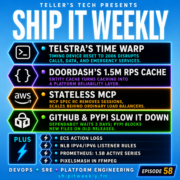
1. DevOps'ish 319: An NTP server time-traveled to 2006, an OpenAI model broke into Hugging Face, and more
- Category: Deep Dive
- What happened: A Telstra-operated NTP server malfunctioned during maintenance and reset its clock to 2006, triggering a major outage across Australia that disrupted emergency services including emergency call systems. The root cause was traced to an undocumented design change combined with a software update that had not been applied to the affected server. Operators should audit their NTP infrastructure to ensure all time servers have documented configurations, current software patches, and proper change management processes in place. Organizations relying on external NTP sources should implement monitoring to detect significant time drift and consider maintaining redundant time sources to prevent single points of failure from cascading into service outages.
- Takeaway: Operators should ensure that time synchronization mechanisms are robust and that all relevant updates are applied to prevent similar outages in the future.
- Sources: DevOps'ish
2. PSA: Your Claude shared chats and Artifacts may have ended up on Google
- Category: Community
- What happened: A flaw in the Claude sharing feature caused numerous private chats and interactive documents to become publicly searchable on Google, exposing sensitive information like health records and personal details. This issue has since been addressed.
- Worth reading: Operators should be aware of potential data exposure risks related to sharing features in applications, as this incident highlights vulnerabilities that can lead to sensitive information being unintentionally made public.
- Source: Techcrunch via TLDR Dev
3. Here’s a PSA to those of you who deploy to AWS via GitHub Actions: GitHub OIDC recently made a change
- Category: Community
- What happened: GitHub OIDC has changed the subject format for new repositories created after July 15, which may affect AWS Trust Policies for deployments via GitHub Actions. Users experiencing deployment issues with new repositories should review and potentially adjust their trust policies to accommodate the new format.
- Worth reading: This change could lead to deployment failures in AWS if trust policies are not updated to reflect the new OIDC sub format for new repositories. Operators should verify their configurations to ensure continued functionality.
- Source: readysetcloud.io
4. IBM Report Surfaces Sharp Spike in Cyberattacks Enabled by AI
- Category: Community
- What happened: IBM's latest research reveals a sharp increase in AI-enabled cyberattacks, with breaches now costing organizations an average of $6 million per incident. The primary attack vectors include deepfakes used for social engineering, AI-generated or AI-enhanced malware, and exploitation of inadequate access controls that AI tools can more efficiently probe and abuse. SRE teams should prioritize reviewing access control policies and implementing additional verification steps for privileged operations, particularly where identity verification relies solely on voice or video authentication that deepfakes can compromise. Organizations should also evaluate their security monitoring for anomalous patterns that might indicate AI-driven reconnaissance or automated exploitation attempts against authentication systems.
- Worth reading: Organizations should be aware of the rising threat of AI-enabled cyberattacks, which may necessitate enhanced security measures and training to mitigate risks associated with deepfakes and malware.
- Sources: Security Boulevard Newsletters
5. U.S. Accuses Moonshot AI of Using Restricted NVIDIA Chips, Stealing IP
- Category: Community
- What happened: The U.S. government has accused Chinese company Moonshot AI of illegally using restricted NVIDIA GB300 chips in violation of export controls and stealing intellectual property from Anthropic's Fable model. This enforcement action signals potential expansion of export restrictions and sanctions that could impact future procurement and supply chain planning for AI infrastructure components. SRE and DevOps teams working with NVIDIA hardware or AI model deployments should review their vendor relationships and hardware sourcing to ensure compliance with current export control regulations, particularly if operations involve cross-border data flows or international partnerships. Organizations should also verify the provenance of any AI models or components acquired from third-party vendors to avoid potential sanctions exposure.
- Worth reading: Potential changes in export controls could affect access to critical AI hardware and resources, impacting companies relying on NVIDIA chips for AI development.
- Sources: Techstrong.ai
6. Contrast Security Adds CVE Shield to Protect Applications at Runtime
- Category: Community
- What happened: Contrast Security has launched CVE Shield, a runtime microsandbox technology that blocks exploit behavior against known vulnerabilities without requiring signature updates, with initial coverage for 60 critical Java CVEs. The solution operates at runtime to prevent exploitation of vulnerabilities even before patches can be applied to production systems. SRE teams running Java applications should evaluate CVE Shield as a compensating control to reduce the window of exposure between CVE disclosure and patch deployment, particularly for environments where immediate patching is operationally challenging. This represents a shift from detection-based approaches to behavioral prevention at the application runtime layer.
- Worth reading: This tool could significantly enhance application security by providing immediate protection against known vulnerabilities, potentially reducing the risk of exploitation in production environments.
- Sources: Security Boulevard Newsletters
7. Who's That Knocking At My Door? Ring Facial Recognition Class Action Lawsuit Filed
- Category: Deep Dive
- What happened: Amazon and Ring are facing a class action lawsuit over their Familiar Faces feature, which allegedly scans and stores facial biometric data of individuals without proper consent. The lawsuit raises significant privacy concerns about how the doorbell camera system processes and retains facial recognition data of visitors and passersby. Operators running Ring devices in corporate or facility security deployments should review their biometric data handling policies and ensure proper consent mechanisms are in place, particularly in jurisdictions with strict biometric privacy laws like Illinois' BIPA. Organizations should monitor this case for potential compliance implications and consider whether their current Ring deployments require updated privacy notices or consent workflows.
- Takeaway: This lawsuit could lead to increased scrutiny on privacy practices and AI features in consumer products, potentially affecting how similar technologies are implemented in production environments.
- Sources: Security Boulevard Newsletters
8. Cloudflare: 16 scheduled maintenance windows (São Paulo, Dallas, Barcelona, Berlin (+12 more))
- Category: Community
- What happened: Cloudflare has announced scheduled maintenance across multiple datacenters between July 27-30, 2026, including DFW (Dallas) on July 27 from 06:00-12:00 UTC, BCN (Barcelona) on July 27 from 03:30-12:30 UTC and July 30, GRU (São Paulo) on July 28 from 04:00-10:00 UTC, and additional windows for TXL (Berlin), AMS (Amsterdam), OTP (Bucharest), IAD (Ashburn), ATL (Atlanta), CDG (Paris), and MRS (Marseille) on various dates during this period. During each maintenance window, traffic will be re-routed to other datacenters, which may result in increased latency for end-users in the affected regions. Operators with PNI (Private Network Interconnect) or CNI (Cloudflare Network Interconnect) connections to these datacenters should prepare for potential disruption and validate that their traffic can failover to alternate Cloudflare locations. SRE teams should monitor latency metrics for users in these geographic regions and consider pre-warming CDN caches or adjusting traffic routing policies if serving latency-sensitive applications.
- Worth reading: Operators should anticipate increased latency and possible traffic rerouting during the maintenance window. It's important for PNI/CNI customers to prepare for potential service disruptions as network interfaces may not be accessible.
- Sources: Cloudflare Status
9. Amazon ECS now provides Action Logs for deployment and orchestration visibility - Apparently ECS was doing things
- Category: Community
- What happened: Amazon ECS has introduced Action Logs to enhance visibility into deployment and orchestration activities. This feature allows users to monitor actions taken by ECS, which were previously unreported. However, it comes with additional costs related to CloudWatch ingestion fees.
- Worth reading: This change improves observability for ECS users, potentially reducing the need for support cases. However, it may lead to increased costs due to CloudWatch logging fees.
- Source: AWS via Last Week in AWS
10. AWS Network Load Balancer now supports Listener Rules for custom traffic routing - The Application Load Balancer
- Category: Community
- What happened: AWS Network Load Balancer has introduced Listener Rules for custom traffic routing, a feature that has been available in the Application Load Balancer for a long time. This update simplifies the management of load balancers by allowing users to consolidate their IPv4 and IPv6 configurations into a single NLB, potentially reducing costs associated with maintaining multiple load balancers.
- Worth reading: This change allows for more efficient traffic management and cost savings by reducing the need for multiple load balancers. Operators can now implement custom routing rules at the network layer, which may improve application performance and simplify infrastructure.
- Source: AWS via Last Week in AWS
CVE & Security
11. CVE-2026-16461 Rpcbind: rpcbind: stack buffer overflow in rpcinfo rpcbdump() short-mode version-list formatting
- Category: Security / Patch
- What happened: A stack buffer overflow vulnerability has been identified in the rpcinfo rpcbdump() function related to version-list formatting in rpcbind. This CVE could potentially allow an attacker to execute arbitrary code.
- Do this Monday: This vulnerability could lead to remote code execution if exploited, impacting systems using rpcbind. Immediate patching is recommended to mitigate risks.
- Source: Microsoft MSRC Security Update Guide
12. CVE-2026-16277 Rpcbind: rpcbind: stack buffer overflow in rpcinfo rpcbaddrlist()
- Category: Security / Patch
- What happened: CVE-2026-16277 describes a stack buffer overflow vulnerability in the rpcinfo rpcbaddrlist() function of rpcbind. This vulnerability could allow an attacker to execute arbitrary code on the affected system.
- Do this Monday: This CVE is critical as it involves a stack buffer overflow that could lead to remote code execution, potentially affecting production systems running rpcbind.
- Source: Microsoft MSRC Security Update Guide
13. CVE-2026-8450 HTTP::Daemon versions before 6.17 for Perl allow OS command injection via send_file()
- Category: Security / Patch
- What happened: CVE-2026-8450 affects HTTP::Daemon versions prior to 6.17 for Perl, allowing OS command injection through the send_file() function. This vulnerability could lead to unauthorized command execution on affected systems.
- Do this Monday: Operators using affected versions of HTTP::Daemon should prioritize upgrading to version 6.17 or later to mitigate the risk of command injection attacks.
- Source: Microsoft MSRC Security Update Guide
14. AI-Enabled Security Researchers Discover How a Crafted Video Can Provide Attackers Access to Your PC
- Category: Security / Patch
- What happened: JFrog Security Research disclosed the "PixelSmash" vulnerability in the FFmpeg media framework, which enables Remote Code Execution and Denial of Service attacks. This vulnerability has existed for sixteen years and impacts various applications utilizing the MagicYUV decoder. Exploitation can occur through a specially crafted media file, prompting users to verify their systems for the vulnerability and apply necessary patches or disable the decoder.
- Do this Monday: This vulnerability poses a significant risk as it allows attackers to execute arbitrary code on affected systems, potentially leading to severe security breaches. Immediate action is recommended to mitigate risks associated with this long-standing vulnerability.
- Source: InfoQ DevOps
15. GitHub and PyPI Bet On Time to Slow Down Software Supply Chain Attacks
- Category: Security / Patch
- What happened: GitHub and PyPI have implemented time-based controls to mitigate software supply chain attacks. GitHub's Dependabot now introduces a three-day delay before opening routine version-update pull requests, giving security scanners and maintainers a window to detect malicious packages before they propagate through automated dependency updates. PyPI has implemented a complementary policy that blocks the addition of new files to releases older than 14 days, preventing attackers from retroactively poisoning established package versions. SRE teams should be aware that Dependabot updates will arrive with this built-in delay, which may affect update cadences but provides crucial time for security review before automated merges. These changes represent a shift toward slower, more deliberate dependency management that prioritizes security detection over immediate availability of new versions.
- Do this Monday: These changes could affect the speed of dependency updates and release cycles, potentially delaying critical updates while enhancing security against supply chain attacks.
- Sources: DevOps.com
16. RHSA-2026:46460: Important: tigervnc security update
- Category: Security / Patch
- What happened: An important security update for tigervnc is now available for Red Hat Enterprise Linux 8.6. This update addresses vulnerabilities rated as having a significant security impact. Detailed severity ratings are provided via the CVSS base score linked in the advisory.
- Do this Monday: This update may require immediate attention to mitigate security risks associated with tigervnc vulnerabilities in production environments.
- Source: Red Hat Security Advisories (RHSA)
17. RHSA-2026:46389: Important: freerdp security update
- Category: Security / Patch
- What happened: An important security update for freerdp is available for Red Hat Enterprise Linux 8.6. This update addresses vulnerabilities rated as having a significant security impact. Detailed severity ratings are provided via the CVSS base score linked in the advisory.
- Do this Monday: This update may require immediate attention to mitigate potential security risks associated with freerdp vulnerabilities in production environments.
- Source: Red Hat Security Advisories (RHSA)
18. Grafana Security Update for RHEL 8 - Important Vulnerabilities Fixed
- Category: Security / Patch
- What happened: An important security update for Grafana is now available for Red Hat Enterprise Linux 8, addressing vulnerabilities rated as having a significant security impact. Detailed severity ratings are provided through the CVSS base score linked to the relevant CVEs.
- Do this Monday: This update may require immediate attention to ensure Grafana installations on Red Hat Enterprise Linux 8 are secure and up-to-date, potentially affecting production environments.
- Source: Red Hat Security Advisories (RHSA)
19. Service Mesh Misconfigurations in Kubernetes Enable Lateral Movement Attacks
- Category: Security / Patch
- What happened: The article discusses the security implications of service mesh configurations in Kubernetes, highlighting the increased costs associated with data breaches that involve misconfigured mTLS policies or authorization rules. It emphasizes how such misconfigurations can lead to significant security risks, enabling lateral movement within a cluster and potentially resulting in widespread compromise.
- Do this Monday: Operators should be aware of the critical importance of correctly configuring mTLS and authorization rules in service meshes to prevent costly data breaches and ensure cluster security.
- Source: dev.to (Kubernetes tag)
Releases
20. Linkerd: 26.5.2, 26.6.1
- Category: Release
- What happened: Linkerd has released edge-26.5.2 and edge-26.6.1 with notable changes for service mesh operators. Version 26.5.2 promotes native sidecars to general availability and sets them as the default configuration, while also fixing a race condition in remote cluster gateway status updates and preventing Servers from incorrectly affecting workloads in other namespaces. Version 26.6.1 addresses an off-by-one error that caused HTTP requests to be rejected when body sizes exactly matched the configured limit, which previously prevented valid requests at the boundary condition from being processed. Operators running edge releases should upgrade to 26.6.1 to benefit from both the native sidecar GA status and the HTTP body size validation fix.
- Do this Monday: This release includes critical security fixes for multiple CVEs, which could impact the security posture of applications using Linkerd. The promotion of native sidecars to GA may affect deployment configurations and operational practices.
- Sources: Linkerd releases
21. AWS Launches Amazon GuardDuty Investigation Agent to Automate Threat Triage
- Category: Release
- What happened: AWS has introduced a public preview of the GuardDuty investigation agent, which automates the correlation of findings, activity logs, and resource topologies into structured reports. These reports include risk ratings, confidence scores, and MITRE ATT&CK classifications. The agent can be accessed via the AWS MCP Server, allowing for investigations to be conducted through agentic tooling, with a limit of 10 investigations per account per day during the preview phase.
- Do this Monday: This new tool could streamline threat triage processes, potentially reducing response times and improving security posture. However, the daily investigation cap may limit its immediate utility for larger organizations.
- Source: InfoQ DevOps
22. MCP’s biggest update removes the machinery many servers were built around
- Category: Release
- What happened: The latest update to the Model Context Protocol (MCP) simplifies its architecture by removing sessions and initialization handshakes, which previously complicated deployments. This change aims to reduce the need for specialized infrastructure, allowing MCP to operate more like a stateless service. The update introduces a pay-as-you-go complexity model, where each request is self-contained, improving scalability and reducing operational overhead for teams deploying MCP servers.
- Do this Monday: This update could significantly affect how MCP servers are deployed and managed, reducing the complexity and infrastructure requirements for operators. The shift towards a stateless model may lead to easier scaling and maintenance of services using MCP.
- Source: The New Stack
Also this week
Community reads
23. Amazon Managed Service for Prometheus supports 1.5B active metrics and 200K rules per workspace
- Category: Community
- What happened: Amazon Managed Service for Prometheus has increased its capacity limits to support up to 1.5 billion active metrics and 200,000 rules per workspace, significantly expanding monitoring capabilities for large-scale environments. Operators running complex Prometheus deployments should evaluate whether this higher capacity allows consolidation of multiple workspaces, but must carefully assess the cost implications since AWS charges based on active metrics ingested and query volumes. Additionally, AWS Organizations has raised the resource control policy (RCP) quota from 1,000 to 2,000 per organization, indicating some customers reached the previous limit and suggesting this may benefit teams managing complex multi-account governance models. In an unrelated change, Amazon SES has introduced three new pricing tiers (Essentials, Pro, and Enterprise) after removing its free tier, with bundled pricing aimed at providing savings compared to individual service pricing.
- Worth reading: This change may affect production by enabling better monitoring capabilities for large-scale applications, allowing teams to manage and analyze more metrics and rules without performance degradation - consider reviewing your monitoring setup to leverage these new capabilities.
- Sources: AWS via Last Week in AWS
Lightning links
- Uber’s Zero Growth Stack: Scaling Services, While Optimising Infrastructure and AI Cost (InfoQ DevOps) -- Uber's 'Zero Growth Stack' aims to decouple capacity growth from business demand for better scalability.
- Microsoft Introduced a Cybersecurity Model (TLDR AI) -- Microsoft's new MAI-Cyber-1-Flash model identifies vulnerabilities in large codebases.
- GitHub Copilot for JetBrains adds improved OpenTelemetry configuration (GitHub Changelog) -- Enhanced OpenTelemetry configuration in GitHub Copilot for JetBrains improves observability.
- Migrate self-managed PostgreSQL to Amazon RDS using the RDS console (AWS Database Blog) -- A guide on migrating PostgreSQL databases to Amazon RDS using the AWS console.
- Securing Agents Across Perplexity's Client Endpoints with Numbat (TLDR AI) -- Numbat is an open-source suite designed to secure AI agents on client endpoints.
- A Browser Click Is Not Proof: Verifying That Web Apps Actually Work (dev.to (DevOps tag)) -- RealDone is an open-source tool that verifies web applications perform intended actions.
- Kubernetes Architecture: What Actually Happens Between `kubectl apply` and a Running Pod (dev.to (Kubernetes tag)) -- An in-depth look at the internal workings of Kubernetes during `kubectl apply`.
- n8n AWS Bedrock Integration: Solving Throttling and Cost Issues (dev.to (DevOps tag)) -- This article discusses common pitfalls with n8n and AWS Bedrock, focusing on throttling.
Human Stories
Looking at this week's stories, I keep coming back to how much of our infrastructure runs on trust assumptions that haven't aged well. An NTP server regression took us back to 2006 and brought down emergency services across an entire country because nobody imagined a time server could simply decide what year it was. Claude's sharing feature leaked private chats onto Google, GitHub's OIDC change silently broke deployment pipelines, and Ring cameras have been quietly building facial recognition databases in people's homes. We've spent years building faster deployment pipelines and more sophisticated observability tools, but we're still terrible at the fundamentals: validating trust boundaries, testing failure modes that seem unlikely, and questioning whether the convenience features we enable today will become the nightmare headlines we read tomorrow. The real technical debt isn't just in our code, it's in all the implicit assumptions we've baked into systems that now touch everything from emergency services to healthcare records.
Also worth reading
Every network diagnostic tool assumes you only care about the path from your machine. (Last Week in AWS)
A firm's sites went down due to a series of misfortunes including an expired credit card, a spam filter blocking billing alerts, and MFA being tied to a non-functional laptop. The recovery email was also on a suspended domain, complicating recovery efforts. This incident serves as a cautionary tale
Anthropic wants tests, not bans, as OpenAI and Google back open weights (The New Stack)
Anthropic's CEO Dario Amodei advocates for mandatory safety testing of AI models instead of a ban on open-weight models. He proposes tightening export controls and requiring evaluations for models deemed sufficiently capable, though the definition of 'sufficiently capable' remains unclear. This prop
"Our emails are going to spam" — a sysadmin's triage order (dev.to (DevOps tag))
The article discusses the common issue of emails landing in spam and provides a triage order for sysadmins to diagnose the problem effectively. It outlines three primary causes: authentication issues (SPF, DKIM, DMARC), reputation of the sending IP/domain, and content/engagement factors. The author